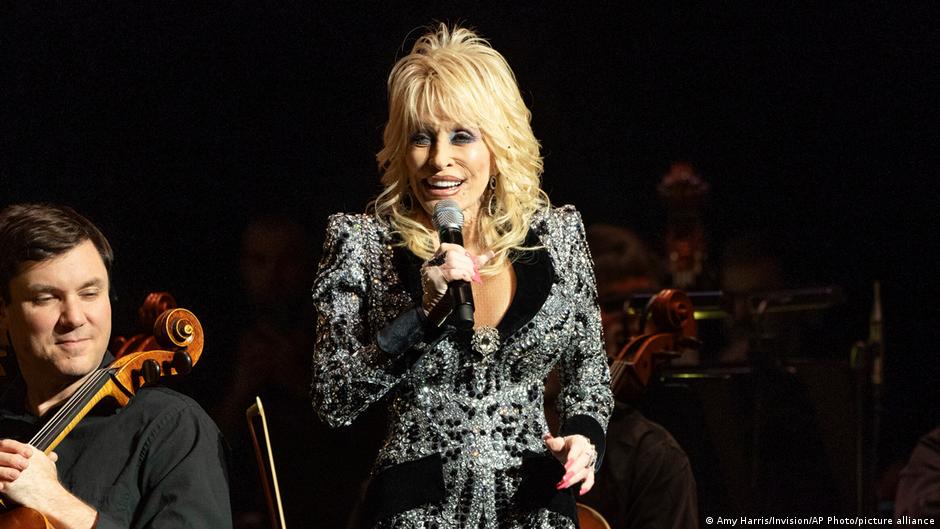
When the news broke today that Dolly Parton had died, everyone in the Billboard newsroom from the most seasoned veteran to the college intern shed a tear — because it felt like, as one person said, “an angel had just died.†The world already feels like a colder place without her in it. Everyone loved Dolly Parton because Dolly Parton honestly loved everyone. (Which is very different from liking everyone.)
Explore

See latest videos, charts and news
Parton felt like the one person on earth that everyone could agree was nothing but a universal good. Groups who were famously at odds, such as conservative Christians and the LGBTQIA community, agreed on their love for Dolly. Today she's even being mourned by The Muppets.
Parton generally declined to talk politics or politically charged issues, but she very clearly made her strong opinions known, and the thread always led back to treating people with love and kindness. She constantly stressed that she wasn't here to judge; she'd leave that up to God.
But that doesn't mean she played it safe. Not in her words or in her music. People weren't writing songs about dying by suicide because they were pregnant in 1968 (or really now, 60 years later), but Parton was. In “The Bridge,†a women jumped off a bridge where she and her lover had first kissed after he abandoned her when she became pregnant. Even more heartbreaking is 1969's “Down From Dover,†about a pregnant teen whose parents send her away and her baby dies while being born — because, the protagonist reckons, the baby knew the father was never coming back. That one got banned from the radio. (By the today's far right definition, she was “woke†— but not even the far right was ever going to cancel Dolly.)
She had a unique blend of savvy and sensitivity, knowing when the right thing for her business was also just the right thing in general. In 2018, she renamed her Dixie Stampede dinner attraction Dolly Parton's Stampede because she became aware the word “Dixie†and its associations with the Confederacy could be hurtful to some.
“When they said ‘Dixie' was an offensive word, I thought, ‘Well, I don't want to offend anybody,†she told Billboard in a 2020 cover interview. “This is a business. We'll just call it The Stampede.' As soon as you realize that [something] is a problem, you should fix it. Don't be a dumbass. That's where my heart is. I would never dream of hurting anybody on purpose.â€
In that same interview, she was ready when asked about the Black Lives Matter movement and was unequivocal in her support of peaceful protests: “I understand people having to make themselves known and felt and seen,†she said. “And of course Black lives matter. Do we think our little white asses are the only ones that matter? No!â€
In my more than 30 years as a journalist, I have never had a line from a story picked up as much as her “little white asses†comment, though Billboard deliberately didn't lead with it or put it in the headline. Other artists may have backed down or said they were misquoted, but not Dolly.
So many artists, especially young ones, could learn from Parton about professionalism. Parton's publicists never asked for questions in advance or said any topics were off limits — because Parton knew how to handle herself, and though petite, was hardly delicate.
She was also freakishly punctual. One time I had a 6:00 a.m. interview with Parton. I commented about it being so early, and she chided me for thinking that 6:00 a.m. was early, since she normally got up by 4:00 a.m. We had exactly 10 minutes. She was still answering a question when we rounded the 10-minute mark. She finished around 10 minutes and 15 seconds in, and immediately told me we had run over and she had to go. I still got enough from that 10-minute interview to write two pieces with no overlap at all.
Parton leaves behind more than 3,000 songs — one of which, “Jolene,†Billboard editors picked as the Best Country Song of All Time. (Which was just one year after the editors chose Parton as the Greatest Country Artist of All Time.) But her legacy is so much more than even that. Her Imagination Library provided free monthly books to children from birth to age five for more than 30 years, serving more than 3 million kids.  She gave $1 million to Vanderbilt University to help develop the COVID-19 vaccine. Here's how trusted she was to do the right thing: In 2022, Jeff Bezos and his wife, through their Bezos Courage and Civility Award, gave Dolly Parton $100 million to donate to the non-profits and charities she chose.
In my office, I have a painting of Dolly with the initials WWDD, short for What Would Dolly Do? Now that she's gone, those are words to live by now more than ever.