Closing post
Time to wrap up…
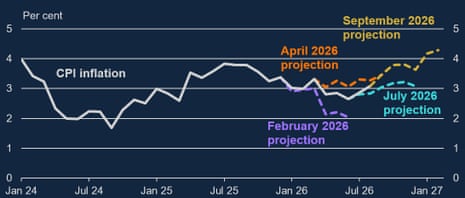
Households will face the steepest summer rise in energy charges in four years after months of soaring market prices caused the government's energy price cap for Great Britain to climb by 13%.
Under the cap the average gas and electricity bill will increase to the equivalent of £1,862 a year from July until the end of September to take account of the rise in global energy market prices caused by the war on Iran, up from £1,641 a year in April to June.
The energy regulator for Great Britain, Ofgem, determines the maximum a supplier can charge for each unit of gas and electricity based on the cost of supplying energy to homes, including the average wholesale market costs in the months leading up to the start of each new cap. The cap also incorporates the maximum daily standing charge (flat fees levied for a connection regardless of how much energy people use).
The ousted chair of BP, Albert Manifold, has accused the oil company of firing him without warning and disputed reports about his conduct, amid the latest boardroom turmoil to rock the company.
In an emailed statement, Manifold said he was “removed without warning and without explanation†by the FTSE 100 company.
He added: “I dispute entirely the characterisation of my conduct and I will not allow a false narrative to go unchallenged.â€
Flying Tiger is the latest retailer to be snapped up by Modella Capital, the British investment firm which already owns the former high street arm of WH Smith, now called TG Jones.
The Danish company, known for its cut-price homewares and craft kits, operates about 1,000 stores worldwide, including 80 in the UK, where it employs more than 1,000 people.
For the past year it has been controlled by its banks and management, which bought out the company in June.
The acquisition will be Modella's first foray outside the UK, but is likely to raise fears about the future of Flying Tiger as the private equity firm, set up four years ago, has quickly gained a reputation for rapid and hard-nosed restructuring. It is asking creditors of TG Jones to approve a plan that could see up to 150 stores close, including up to 60 hosting Post Offices, with the loss of hundreds of jobs.
Employees at Samsung Electronics's memory chip division are to receive bonuses averaging about £310,000 each through a landmark profit-sharing agreement, as the AI boom drives up chipmakers' profits.
Fears of a strike at Samsung were averted on Wednesday after two unions for the world's largest memory chipmaker said that 74% of the 62,616 workers who cast their votes had backed the deal.
The agreement, mediated by South Korea's government, means Samsung will set aside 10.5% of operating profits at its semiconductor division to pay special bonuses to its chip workers. It should end a bitter five-month dispute.
Key events
Please turn on JavaScript to use this feature
US stock market opens flat
The US stock market has opened broadly flat. The blue chip S&P 500 index is up 0.03%, while the Dow Jones Industrial Average has ticked up 0.3%.
Oil is now hovering around the $95 mark, with Brent crude down about 4% to $95.70.
The US stock market will also open shortly – futures for the S&P 500 are pointing toward a 0.1% rise.
Axel Rudolph, of the broker IG, notes that oil prices are now around a five-week low.
double quotation mark Crude prices have tumbled to a five-week low as hopes grow that tensions in the Middle East may finally begin to ease. Reports from Iranian state television suggesting a potential agreement with the US could reopen shipping through the strait of Hormuz have given markets the clearest sign yet that the worst-case scenario for global energy supplies might be avoided.After weeks of investors pricing in disruption and inflation risks, the sharp reversal in oil offers some welcome relief for equities and central banks alike, though markets will remain wary until concrete details of any agreement begin to emerge.â€
Iran's state TV is reporting that under a draft peace deal between Tehran and Washington, Iran would restore commercial shipping activity via the strait of Hormuz within a month and the US would withdraw military forces from Iran's vicinity and lift a naval blockade.
It also reported that the framework, which excludes military vessels, was not yet finalised and that Tehran would take no steps without “tangible verificationâ€, according to Reuters. Reports suggest that if a final agreement is reached within 60 days, it could be approved as a UN Security Council resolution.
Oil drops 4% amid reports Iran will restore ships through strait of Hormuz to pre-war levels
Oil prices have dropped about 4% after Iranian state TV said Iran was committed to restoring the number of commercial transit ships through the strait of Hormuz to pre-war levels within one month.
Brent crude – the international benchmark for oil – dropped 4% to below $95 a barrel, before recovering slightly to $95.24 a barrel.
The US dollar has slipped 0.2% against a basket of other major currencies.
Flying Tiger bought by TG Jones owner
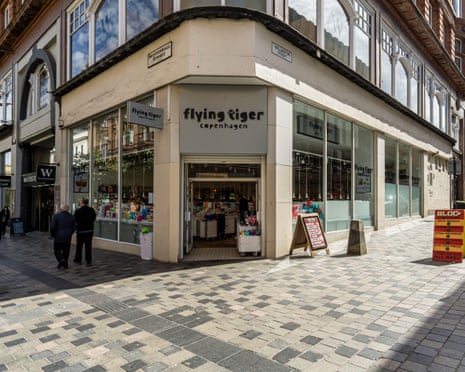
Flying Tiger is the latest retailer to be snapped up by Modella Capital, the British investment firm which already owns the former high street arm of WH Smith, now called TG Jones.
The Danish company, known for its cut-price homewares and craft kit, operates about 1,000 stores worldwide, including 80 in the UK, where it employs more than 1,000 people.
For the past year it has been controlled by its banks and management, which bought out the company in June.
Full story by my colleague Sarah Butler here:
Lidl overtakes Morrisons as fifth biggest grocer in Britain

Sarah Butler
Lidl has overtaken Morrisons to become the fifth largest grocer in Great Britain as its sales were powered ahead by households seeking to keep a lid on their weekly bills.
The German-owned discounter increased its sales by 8.8% year on year – making it the fastest-growing store-based grocer – to hit a record high market share of 8.6% over the 12 weeks to 17 May, according to figures from the market analysts Worldpanel by Numerator.
That compared with an 8.3% share for Morrisons in the period as the Bradford-based chain grew its sales by only 1.3% compared with a year earlier.
Lidl now sits behind the fellow German-owned discounter Aldi, which is the UK's fourth biggest supermarket. Aldi is less than one percentage point behind struggling Asda, where sales continue to fall back despite efforts at a turnaround.
Amazon’s UK tax bill tops £1.3bn
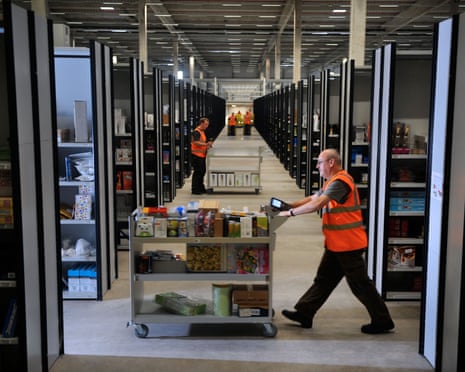
Amazon has said it paid more than £1.3bn in direct tax in the UK in 2025, after making more than £30bn in revenue in the country last year.
Direct taxes paid by the company grew to more than £1.3bn, up more than 20% from about £1bn last year, it said. However, Amazon did not provide a breakdown of the different taxes it paid, such as corporation tax, national insurance and digital services tax.
Amazon employs more than 75,000 people in the UK, which makes it one of the biggest employers in the country – and means that it likely faced a significant rise in its employers' national insurance contributions, which increased last April.
The company said it collected and administered £5bn in taxes for the government through VAT, income tax and employee national insurance contributions. Last year was the first time it said its tax bill surpassed £1bn in the UK.
Hong Kong has overtaken Switzerland as the world's largest cross-border wealth hub for the first time, a report has found.
Cross-border wealth in the city in 2025 rose 10.7% to $2.9tn, according to Boston Consulting Group's 2026 Global Wealth Report, driven by investment from mainland China and a revival in its IPO market.
The gap between Hong Kong and Switzerland could hit almost $600bn by the end of the decade, BCG forecast.
In the UK, cross-border wealth grew 7% to around $1tn in 2025, but the report found that changes to non-dom rules and inheritance tax meant high net worth people were moving their money elsewhere. It expects growth will slow to around 5% by 2030.
AstraZeneca potential blockbuster cancer drug faces delay from US regulator
Shares in AstraZeneca slipped 0.4% this morning after the US regulator extended its review period of its new cancer treatment, camizestrant.
It comes after its advisory panel voted against approving the medication last month.
AstraZeneca said on Wednesday that the US Food and Drug Administration had extended a decision data for the drug's approval as it reviews additional data provided by the company.
Investors think the drug could be a blockbuster product, with the potential for $5bn in peak annual sales.
Susan Galbraith, executive VP of the company's oncology and haematology R&D, said AstraZeneca was looking forward to continuing “dialogue with the FDA†to bring the drug to US patients as quickly as possible.
UK gilts rebounding despite energy price cap rise
UK gilts are rebounding this morning, with the 10-year yield dropping by 4 basis points. (Gilt yields rise when prices fall).
Kathleen Brooks, of the broker XTB, says the yield is now down by 34 basis points since it peaked on 18th May at 5.17%.
double quotation mark There is a clear link between the oil price and UK yields, so when the price of oil dips it drags the yield lower with it. It may be ironic that UK yields are falling today even though the price cap on household energy bills is set to rise by 13% in July, the highest level in more than 2 years.…So, why are bond yields not responding to this news? There are a few reasons. Firstly, the price cap is not rising as fast as it was in 2022 due to the increased use of renewable energy in the UK. Secondly, if there is a peace deal in the coming days, that includes reopening the Strait of Hormuz, then energy prices could fall further, which could limit further upside on energy bills in future. Added to this, although the rising price cap will put upward pressure on inflation, the second-round effects are likely to be minimal, since the UK economy is showing signs of weakness and the unemployment rate is rising.
After selling off earlier this month, UK gilts are attracting interest. This is being helped by a softer tone on fiscal rules and tax rises from Labour leadership hopeful, Andy Burnham, which has slightly reduced the political risk premium added to UK debt.
On top of this, former PM Tony Blair warned the Labour party to avoid a lurch to the left, stating what to many seems obvious, that a move to the left will not boost the party's chances at the next general election. Hard left Labour policies are seen as economically and fiscally destructive. Blair warned against tax rises and supported cutting the benefits bill. If Blair's suggestions can be translated into policy, this could add to gilts' attractiveness, but this is a big if.
Elsewhere this morning, some updates from Pets at Home and Hollywood Bowl.
Hollywood Bowl is the best performer across the FTSE this morning, with its shares up almost 12% after reporting sales growth even as consumers tighten their belts.
The bowling operator said the appeal of “affordable leisure†is strong in an uncertain environment for consumers. Its revenue grew 9.5% in the six months ended in March to £141.5m, compared with the same period last year.
Meanwhile Pets at Home has reported its annual pre-tax profit dropped 28.3% to £86.5m in the year ended on 26 March. But its numbers are in line with expectations, and the company has said its retail sales growth is accelerating and that it expects good growth from its vet business this year. Its shares are up by about 4%.
Hybrid car sales jump in EU

Lisa O'Carroll
Sales of hybrid cars have shot up across the EU in the wake of the watering down of emission targets late last year, new figures show.
The new rules have helped Chinese brands extend their market ‌share, underlining political tensions over the growing deficit the EU has with China.
New figures show that every state in the EU, bar Finland and Ireland, has a deficit with China, which is now targeting middle industries, particularly in Germany. It has led to recent accusations that Berlin is sleep walking into deindustrialisation at the hands of Beijing.
There are concerns that sales of Chinese hybrid cars have shot up partly because they were not covered by the EU tariffs on EVs in 2024.
Today new data from the European Automobile Manufacturers' Association (ACEA) shows that petrol and diesel cars account for just 30% of the new cars sold so far this year, down from 38% for the same period last year.
Electrified vehicles (battery-electric, plug-in hybrid and hybrid models) rose about 21% and made up more than two-thirds of total registrations, while petrol and diesel cars fell about 15% and 17%, respectively.
The figures add to evidence that emissions regulations subsidies and higher fuel costs are pushing buyers towards EV and hybrids even in countries in middle and southern Europe, which have been slower than the nordics to transition to electric.
In Italy, which the car industry has complained has a lack of infrastructure, sales of EVs are up 73%, sales of hybrids up 26% and sales of plug-in hybrids up 99%. In France sales of EVs are up 48%, while in Germany they are up 41%.
In Belgium, where car culture is strong particularly in Brussels, sales of EVs are only up 1.1%.