
Closing post
Time to wrap up…
The sell-off in AI stocks has intensified, driving South Korea's stock market down to its lowest level in three months.
Investors continued to ditch chip stocks on Tuesday, amid rising concerns about the huge amount of borrowing among AI companies to fund their datacentre expansion plans.
The South Korean semiconductor companies SK Hynix and Samsung Electronics fell by more than 10%, dragging the country's Kospi share index down by 11.5% to its lowest point since mid-April.
US chip stocks extended their recent losses when Wall Street opened on Tuesday, with Intel, Advanced Micro Devices, Sandisk, Western Digital Corp and Seagate Technology all down by more than 4%.
The British drugmaker GSK is to announce sweeping job cuts as part of a £1.9bn cost-cutting programme to pay for a £400m investment in UK life sciences over the next three years, including in a new research and development centre in Cambridge, as it looks to develop drugs more quickly under its new chief executive.
The pharmaceuticals company announced on Tuesday it will move more than 1,000 of its scientists to its new site on the Cambridge biomedical campus. It will close its R&D site in Stevenage in Hertfordshire by 2029, while upgrading its R&D laboratories at nearby Ware and moving some employees there.
Andy Burnham has been urged to launch a tax raid on UK banks, as Barclays revealed a 30% increase in its half-year bonus pool after a rise in profits.
Fresh corporate filings released on Tuesday showed the bank put £1.3bn towards its bonus pool for the first half of the year. That figure, which includes annual and deferred bonuses, was up from £1bn last year.
That bonus pot will continue to accumulate through the second half of this year, and could lead to more generous payouts for high-performing bankers when Barclays makes final pay decisions by the end of February next year.
Unilever has warned it will push through further price rises over the coming months, as the Marmite, Dove and Hellmann's owner tries to recoup its own growing costs.
The Anglo-Dutch company said that while the pace of price rises slowed in the second quarter, owing in part to World Cup-related discounts and efforts to stay competitive in Brazil, these were “temporary factors†and would not shield consumers for long.
“We expect underlying price growth to accelerate in the second half as commodity-driven pricing continues to land in market,†the company told shareholders on Tuesday.
Key events
Wall Street wobbles as AI fears rattle stock market
The US stock market has opened lower today as AI fears continue to rattle investors – the tech-heavy Nasdaq index is down 0.4%, while the S&P 500 is down 0.2%.
Shares in US chip and memory stocks are falling, with Intel, Advanced Micro Devices, Sandisk, Western Digital Corp and Seagate Technology all down by more than 4%.
Chip designer Nvidia is continuing its fall from yesterday, down 1.2%.
The investment in the new research centre in Cambridge comes as chief executive Miels works to expand GSK's pipeline of new drugs and lays out a plan for the company to hit its £40bn sales target by 2031.
The company also announced a new cost-saving drive to fund its drug pipeline, with a goal of saving £1.9bn a year by 2029.
Its half-year results, also published today, showed total revenue rose 5% to £8.4bn at constant currencies in the second quarter, ahead of expectations.
Specialty medicines revenue was up 14% to £3.8bn, with double-digit percentage growth across its respiratory, immunology and inflammation, oncology and HIV drugs divisions.
However, its total operating profit fell 75% to £481m, which it blamed mostly on higher impairments on its abandoned cough drug, camlipixant, of £1.3 billion.
Duncan Ferris, an analyst at the broker Freetrade, says the issue is a “reminder of the difficulties involved in developing experimental medicines.â€
double quotation mark With this in mind, GSK's Accelerate Growth programme aims to supercharge R&D efforts, indicating the company is keen to secure the treatments that will fund its future growth. Investments include a brand new flagship R&D centre at Cambridge's huge Biomedical Campus and revitalising its pipeline by doubling late-stage trial starts in 2026.These measures do mean R&D spending is set to outpace sales growth, but GSK says the programme will also produce significant annual cost savings.
With a busier pipeline in play, the challenge now is translating it into more successful treatments rather than billion-pound write-offs.â€
Jonathan Reynolds, secretary of state for business, innovation, science and trade, says GSK's investment “demonstrates the success of the government's Industrial Strategy in unlocking vital private investment into the UK, one year on from the launch of the Life Sciences Sector Plan.â€
Life sciences is one of the government's key growth sectors in its modern industrial strategy. There has been more than £3bn of new public-private investment in the UK life sciences over the last 12 months, according to the government.
GSK to open new R&D hub in Cambridge
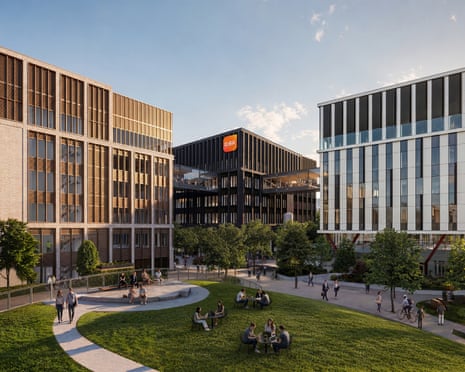
GSK has announced it will shut its main research and development hub in Stevenage and open a new site in Cambridge.
The pharmaceutical giant said there will be a phased move more than 1,000 staff that work in Stevenage to the new 300,000 sq ft centre in Cambridge by 2029.
Some staff currently based in Stevenage will move to its site in Ware, which is also set for an upgrade as part of its £400m investment plan over the next three years.
The company, which is headquartered in London, is expected to announce sweeping cuts and redundancies across other departments to help pay for the investment.
Luke Miels, chief executive at GSK, said:
double quotation mark This investment will accelerate our R&D and help us deliver new, competitive products.It integrates GSK further into one of the world's leading centres of knowledge and demonstrates the attractiveness of the UK's life sciences ecosystem.
Prime minister Andy Burnham has praised the investment:
double quotation mark I'm determined to build a country that backs industry so that benefits are felt in every postcode.This investment by GSK is a vote of confidence in British business. A boost for home grown innovation and expertise. And a step towards more people getting access to new medicines and cutting edge treatments that will change lives for the better.
And chancellor John Healey adds:
double quotation mark This investment is a significant vote of confidence in the British economy and in Cambridge's cutting-edge life sciences sector.It will support hundreds of high-skilled jobs in the East of England, boost the UK's international status as a leading medical innovator, and help our drive for growth in every postcode.
The new R&D centre is being developed by the US property group Prologis and is within the wider Cambridge Biomedical Campus, which GSK describes as “one of the largest of its kind in Europeâ€.
Shares in GSK are up by 2.6% this afternoon.

Sarah Butler
Games Workshop is bulking up its stockpile of plastic by £2m amid concerns of “supply chain disruption†during the Middle East conflict.
The Nottingham-based company, which makes miniature figures for war games led by its own Warhammer franchise, said it had secured “more than enough†plastic for the period to May next year but “conflicts around the world increase our risk of supply chain disruption,†and so it would be holding more raw material stock.
“We are exposed to raw material price fluctuations as we do not manage this risk by hedging,†Games Workshop said.
The measure emerged as Games Workshop said it had handed its more than 3,300 workers a profit share bonus of £5,000 each as sales rose almost 7% to £659.7m, led by expansion overseas.
Pre-tax profits were up almost 5% to £275.7m – better than expected after the business reclaimed £7.8m of the £12m in tariffs paid to the US up to February 2026. However, Games Workshop expects to pay £13m in new tariffs in the year ahead (as flagged in our earlier post).
Shares in Mercedes-Benz are rising today, up 3.6%, after the German carmaker said its cost-cutting helped stabilise its profits in the second quarter.
Its operating profit rose 22% to €1.5bn, despite a 3% drop in revenue, following cuts in its administrative and research and development spending.
But the company, like rival German carmakers Volkswagen and BMW, has cut its annual sales forecast as it struggles against a slowdown in the Chinese market.
Operating profit in its car business in China, where the company also booked a €704m impairment charge, slumped to €49m from €783m last year.
Mercedes now expects its revenue overall will be “slightly†lower this year, compared with a previous estimate that it would remain close to last year's €132.2bn.
EY fined £1.2m for audit of Made.com
The UK's accounting regulator has fined EY and a partner at the firm £1.2m over failures linked to its audit of the collapsed online furniture retailer Made.com.
The Financial Reporting Council (FRC) said it fined the firm £1.197m, as well as Julie Carlyle, the lead partner who signed off on the audit, £49,000.
The FRC found that EY relied too heavily on Made.com's own forecasts and did not sufficiently challenge them to check the company's financial resilience.
The company, which listed on the London Stock Exchange in 2021, collapsed into administration less than two years later, resulting in the loss of hundreds of jobs.
The FRC said the failures related to EY's audit of Made's finances in 2021, prior to its collapse.
The fines for the firm and partner were both reduced by 30% after they admitted there had been standard breaches in the audit.
Penrose Foss, executive counsel at the FRC, said:
double quotation mark In this case the auditors relied on management's forecasts without applying sufficient challenge or carrying out adequate testing to obtain sufficient evidence.Absent such challenge and evidence, there is a heightened risk that financial statements present an inaccurate picture of a company's financial position.
Ofcom threatens to block Openreach’s ‘aggressively’ discounted offer
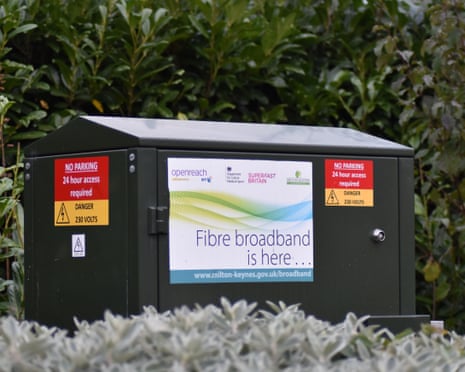
BT's Openreach could be forced to pull a discount scheme for new fibre broadband customers, after the industry regulator said the deal was “not fair and reasonable†and could damage competition in the market.
Ofcom said the “New To Openreach†scheme, which offers discounts of up to £9.50 for up to 30 months, was targeting “aggressive†discounted pricing at new customers that rival fibre broadband providers rely on to grow.
Ofcom said:
double quotation mark Matching these discounts may not allow competitors to recover their costs, given the low prices they are already offering to all of their customers.…Without sustainable competition, over time prices could rise. And firms competing to deliver affordable, ever better broadband helps underpin economic growth.
Ofcom, which has proposed to block the offer, said it will take responses to its consultation until 27 August, and then will make a final decision by the end of September.
Openreach argued its offer had ‌been “put forward in good faith at a time when many households are watching every bill“.
Commercial managing director James Lowther said:
double quotation mark In such a competitive ‌market, we don't believe that regulation should protect poor business models and we disagree with Ofcom's analysis.
Natalie Black, Ofcom's director for infrastructure and connectivity, said:
double quotation mark Openreach must be able to compete, but they cannot use their significant market power to drive other networks out of the market.In reaching our final decisions on their planned offers, we will prioritise promoting sustainable competition, which is fundamental to keeping prices low in the long term and bringing better broadband to people across the UK.
European stock markets have largely avoided the chip sell-off seen in Asia and the US – the Stoxx Europe 600 is up 0.4% However its worst performers include the French chip manufacturer Soitec, which is down by about 7%.

Graeme Wearden
Mortgage rates in the UK have risen this morning.
Moneyfacts has reported that the average rate of two and five-year mortgages are both higher than on Monday.
They say:
-
The average 2-year fixed residential mortgage rate today is 5.62%. This is up from 5.60% the previous working day.
-
The average 5-year fixed residential mortgage rate today is 5.64%. This is up from 5.61% the previous working day.
Anthony McQuilliam, director at Essex-based Bolt Mortgages, says:
double quotation mark “When Santander follows Halifax within 24 hours, that's not a coincidence, that's a signal. The two biggest high street lenders repricing on the same day tells borrowers everything they need to know about where the market is heading in the short term.“The pattern is familiar: one major lender moves, others follow within days. Anyone waiting to see how things settle is usually the last one through the door before rates climb again.
“If a mortgage renewal or purchase is on the horizon in the next six months, a conversation with a broker needs to happen today, not next week.â€
Graeme Wearden
Games Workshop are among the fallers in London, after the gaming company reported a drop in licensing revenue and an increased bill from Donald Trump's tariffs.
The company – which has been a stock market darling in recent years – told the City it expects to pay £13m in US tariffs in the 2026-27 financial year.
That would be an increase on the £12m Games Workshop handed over in the last financial year, to cover levies at the US border – although it reclaimed almost £8m back after many of the tariffs were declared unlawful.
Kevin Rountree, CEO of Games Workshop, explains:
double quotation mark Well, I thought this would be drama free, how wrong I was. During the period we paid c.£12 million in new US tariffs. Following the US Supreme Court ruling we reclaimed £7.8 million of tariffs for the period to February 2026.
Licensing revenue from royalty income dropped to £32.9m, down from £52.5m in 2024/25.
“This was in line with expectations following the launch of Space Marine 2 in the prior year,†Rountree explains.
Shares in Games Workshop are down 2.8% this morning.
It is a mixed open for European stock markets this morning – the Stoxx Europe 600 is up by 0.1%, while the UK's blue chip FTSE 100 index down by 0.1%.
Oil prices are falling again today, with the international benchmark Brent crude down 2.7% to $85.95 a barrel.
Unilever says prices could rise this year
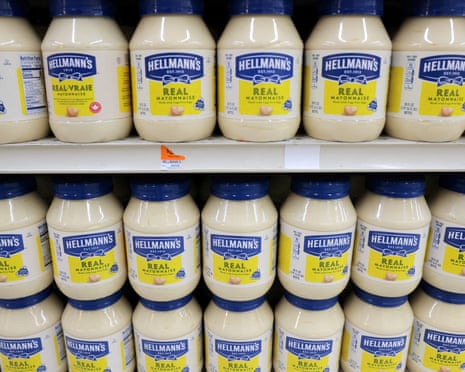
Elsewhere, consumer goods group Unilever has warned that its prices could rise later this year.
The company, which owns the likes of Dove soap and Hellmann's mayonnaise, said it expects “underlying price growth to accelerate in the second half as commodity-driven pricing continues to land in marketâ€.
It came as the FTSE 100 group reported better than expected second quarter underlying sales – up 5.8%, helped by higher volumes and prices.
Chief executive Fernando Fernandez, ‌who was appointed last year to accelerate its ‌turnaround strategy, said:
double quotation mark We have delivered a strong volume-led performance in the first half, with a significant step-up in the second quarter – the best volume quarter at Unilever in over a decade…The macroeconomic environment remains uncertain, but our consistency, discipline and strong first half performance give us confidence that we are well positioned to deliver our upgraded full year outlook.â€
The company said it expects underlying sales growth for 2026 to ​be within its multi-year forecast of 4%-6%, up from its earlier forecast of growth at the bottom end of that range.
Its shares are up 5% this morning.
Matt Britzman, senior equity analyst at the broker Hargreaves Lansdown, says Barclays' investment bank did much of the heavy lifting this quarter.
double quotation mark Costs were higher than expected, but income grew faster, and the combination of a larger dividend and £1bn share buyback adds further weight to an encouraging set of numbers.The outlook has also improved, with Barclays raising its full-year income target and expecting more benefit from its core banking activities. UK lending continues to grow, and the investment bank is producing much healthier returns, although it still has more to prove against the scale of its US rivals. For now, the strategy is moving in the right direction, with stronger profits supporting investment in the business as well as increased cash returns to investors.
The TUC is arguing that the rise in profit suggests the government should be taxing banks more.
The union body suggests the government could use revenue from a higher bank tax to pay for a social energy tariff.
TUC general secretary Paul Nowak says:
double quotation mark Big banks like Barclays are raking it in while working people and local businesses are struggling. High interest rates have been a boon for banks but have meant mortgage misery and higher bills for the rest of us.Andy Burnham has rightly pledged to prioritise tackling the cost-of-living crisis. With the war in Iran rumbling on, energy prices are only going to rise – and households will need more support in the months ahead.
This is not a ‘hard choice'. Barclays' bonanza profits show that banks can easily afford to pay more tax. This is a chance for the new Prime Minister and Chancellor to show whose side they're on. It's time to increase the bank surcharge and tax banks to bring down energy bills.
Barclays traders and investment bankers help push profit up 17%
On the corporate front in the UK this morning, Barclays has reported a 17% rise in its profit in the first half of the year, helped by strong performances by its equity traders and investment bankers.
The bank said its pre-tax profit hit £6.1bn, up from £5.2bn at the same point a year ago and compared with analyst expectations of £5.9bn.
Equities traders at the bank generated £1.26bn, above estimates and up 45% compared with last year. The fixed-income business however was less impressive, reporting income of £1.47bn, around the same level as a year ago.
Investment bankers also did better than expected, with banking fees and underwriting revenue of £747m, up 32%.
However, the bank said its credit impairment charges for bad loans increased to £1.4bn for the half-year period, from £1.1 billion the year before.
The rout in AI stocks also followed a report by the Information that China has begun mass production of homegrown deep ultraviolet, or DUV, chipmaking tools.
Jing Jie Yu, an equity analyst at Morningstar, said:
double quotation mark We believe the market was likely spooked by the progress of China's chipmaking equipment capabilities, and was worried that this progress would threaten the competitive position of global chipmaking and chip equipment leaders.That said, we believe the sell-off today is largely a knee-jerk reaction and overdone.
Introduction: AI sell-off deepens as chip stocks slump in market retreat
Stock markets are tumbling in Asia, as an AI sell-off pushes investors to dump some of the biggest chip stocks in the industry.
The South Korean Kospi dropped more than 10% on Monday, with trading halted at one point, and Japan's Nikkei fell more than 4%.
Shares in the chip companies SK Hynix and Samsung Electronics both fell by more than 10%.
It follows a rough day of trading in the US too – SK’s US-listed shares dropped 7% on Monday, and chip designer Nvidia dropped 5%, giving Apple back its top spot as the world's biggest listed company.
Investors are growing increasingly fearful of the huge amount of borrowing among AI companies – and a report from the FT last night highlighted that prices for credit default swaps ( a tool to bet against corporate debt) tied to the likes of Oracle, SpaceX, Alphabet, Amazon, Meta, Broadcom and Nvidia have risen to record highs in recent days.
Jim Reid, of Deutsche Bank, says markets are “caught between a new sell-off in chipmakers and the positive news that the US-Iran pause from over the weekend would continue as both sides negotiate in talks.â€
double quotation mark This meant that the S&P 500 (+0.02%) and Nasdaq (-0.16%) were little changed yesterday after an initial rally, whilst the Philly Semi Stock Exchange Index (-2.23%) fell further. The equity performance also wasn't helped by new highs in real yields, though nominal 10yr Treasury yields (-2.8bps) came down as Brent crude fell -8.70% yesterday, in its largest decline since April. It is an additional -2.0% lower this morning, trading at $86.59/bbl, after being at $101 on Friday morning. S&P 500 (-0.22%) and Nasdaq (-0.74%) futures are lower this morning.
The AI sell-off also comes even after a flying market debut for the Chinese chip company CXMT, which joined Shanghai's stock exchange on Monday and surged by more than 400% in its first day of trading.
The agenda
-
7am BST: Barclays half year results, Unilever half year results, GSK second quarter earnings, Games Workshop full year results
-
Today: Tate & Lyle holds a general meeting in London for shareholders to vote on proposed acquisition by Ingredion