
Cool UK jobs market ‘questions need for rate hikes’ – economists
James Smith, developed markets economist, UK at ING, said the cooling labour market means there is no need for the Bank of England to raise interest rates, unless there is a “severe and prolonged spike†in energy prices as a result of the Middle East war.
He has crunched today's numbers.
double quotation mark If the UK economy really is picking up speed – as last week's GDP data tentatively hints – then there's little sign of it in the jobs market.Admittedly, just like the growth figures, it really depends on where you look. Government is still actively hiring, a trend we've seen throughout this year. Payroll growth is running at 1.1% on a three-month annualised basis, though we have our doubts over how long this can continue given the more austere plans for public spending coming down the track.
In sharp contrast, consumer-facing industries (hospitality and retail) have been consistently shedding jobs, and if anything, the pace of decline is getting worse. That follows ongoing pressure since last year's tax and minimum wage hikes. The remainder of the private sector is flatlining – and apart from last week's more optimistic KPMG/REC hiring survey, most other surveys don't point to any sign of an imminent upturn.
That disconnect is clearly visible in wage growth. Pay is rising by 6.1% across government, compared to just 2.8% in the private sector. Admittedly, that latter figure is being slightly depressed by “compositional†effects, something the BoE is keen to point out.
Still, the basic story here is that the jobs market is cool. We can see that in the vacancy numbers, which are still gradually falling and are well down on pre-Covid levels. We can see that in the unemployment rate, notwithstanding the latest reliability issues. And crucially for the Bank of England, there is little sign that wage growth is about to turn higher.
Barring a severe and persistent spike in energy prices, we think the Bank will keep rates on hold until next spring, before cutting rates at least twice in 2027.
Key events
Lunchtime summary
US stock futures are down, pointing to a lower open on Wall Street later.
The FTSE 100 index in London edged 13 points, or 0.1%, higher to 10,733. The German, French and Italian markets have lost between 0.25% and 0.5%, while the Spanish market is 0.3% higher. In Asia, Japan's Nikkei slumped 2.5%.
Brent crude is trading above $90 a barrel, at $90.91, after touching $91.85 a barrel, after the ceasefire between the US and Iran expired on Monday, with Donald Trump ruling out an extension.
The rise in energy prices has sparked increases in government borrowing costs to multi-decade highs, as investors worry about higher inflation on the back of rising energy prices, as well as higher government borrowing, partly driven by soaring defence spending in Europe.
The yield on the 30-year US Treasury bond rose above 5.3%, the highest level since 2007, while the benchmark 10-year yield is pushing towards 4.75%, near its highest level since January 2025.
The UK's 10-year gilt yield is up 3 basis points at 5.08%.
Daniela Hathorn, senior market analyst at the trading platform capital.com, said:
double quotation mark Markets are showing a more cautious tone today as the calm that characterised the start of the week begins to crack. US equity futures are pointing lower, with the Nasdaq underperforming, as investors contend with a combination of rising long-term bond yields, renewed geopolitical uncertainty and some fresh nervousness around AI-related stocks. The S&P 500 remains close to record highs, but the backdrop is becoming less forgiving.
The bond market is arguably the bigger story. The US 10-year yield has pushed towards 4.75%, while the 30-year has climbed above 5.3%, its highest since 2007. This is happening despite softer recent economic data reducing expectations for an imminent Fed hike. Instead, the long end is responding to persistent inflation risks, heavy government borrowing and growing competition for capital—including debt issuance associated with the AI investment boom. That creates an uncomfortable environment for equities because financial conditions can tighten even without the Fed raising rates.
Geopolitics is adding to that pressure. Brent is back around $90 after the US-Iran negotiating window expired without a comprehensive agreement, while a vessel was struck attempting to transit the Strait of Hormuz today. Continued disruption in the Red Sea adds another layer of uncertainty. Markets are not treating this as an immediate systemic shock, but the longer oil remains elevated, the harder it becomes to dismiss the inflationary consequences.
Half of homes i Britain taking longer to sell than last year amid mortgage volatility
The US-Israeli war on Iran, which began with airstrikes on Tehran on 28 February, has also had an impact on the UK housing market.
Half of homes in Great Britain are taking longer to sell than last year as volatile conditions in the mortgage market amid the Iran war prompt buyers to “wait and see†if they can get a better deal, according to a report.
As the Middle East conflict continues to unfold, the property platform Zoopla said homes in 180 out of 363 local authorities in England, Scotland and Wales were taking longer to sell compared with a year ago.
It said that although the national average time to sell a home had not changed – at 42 days – a widening regional gap had emerged as buyers in property hotspots raced to complete deals, while uncertainty over mortgage costs fuelled a more cautious approach elsewhere.
The report found the UK's 10 fastest-selling markets were all in Scotland, with the lowest average time to sell at just 11 days in Falkirk. Carlisle and Barnsley in England were the fastest non-Scottish markets at 23 days each.
It said eight local authorities had an average time to sell of two months or more, led by Melton in the East Midlands, at 76 days, Westminster in London, and Teignbridge in the south-west.
Property buyers shopping for a mortgage deal have faced months of heightened volatility as the stop-start Iran war rattles financial markets – with a knock-on impact for the pricing of home loans.
The war in the Middle East led many lenders to pull deals in March, while the cost of a typical home loan soared amid fears that the conflict would reignite global inflationary pressures and force the Bank of England to raise interest rates.
The latest figures from the financial data provider Moneyfacts show the rate on an average two-year fixed residential mortgage stood at 5.61% on Monday – significantly higher than the rate of 4.83% before the outbreak of the conflict at the end of February.
The rate peaked at close to 6% in April. However, uncertainty remains as the Iran war continues to unfold, in a challenge for Threadneedle Street's rate-setters.
New UK cost of living crisis looms with soaring energy bills forecast to lift inflation
Despite the easing in grocery price increases in recent weeks to a two-year low reported by a survey, overall inflation in the UK is expected to have risen to close to 3% in July.
British households are facing a renewed cost of living squeeze, with official figures expected to show ton Wednesday that soaring energy bills drove up inflation in July.
As the Iran war continues to send shock waves through global energy markets, economists predict the surge in UK gas and electricity bills last month will push Britain's headline inflation rate to 2.9%.
In a fresh squeeze on household budgets, the figures from the Office for National Statistics (ONS) due on Wednesday are forecast to show a jump from a rate of 2.6% in June.
The Bank of England is considering raising interest rates from as early as September in response to fears over stubbornly high inflation becoming entrenched in the economy, although the latest jobs market data show it is stabilising or cooling, suggesting a rate hike may not be needed.
Reports also emerged that the water regulator Ofwat was considering plans to impose “surge pricing†on water usage during droughts. It could see customers charged more for water use during summer and less in winter, or else charged higher prices when they pass a threshold of water use, according to the Daily Telegraph.
The latest snapshot will highlight the challenge facing Andy Burnham's government to ease the financial pressure on households and businesses before a difficult autumn budget.
Eurozone economic sentiment improves, driven by Germany
Sentiment in the eurozone, driven by Germany, has improved again this month, suggesting the summer heatwaves and low water levels in key shipping routes along the Rhine and Danube won't derail wider economic growth, analysts say.
Economic expectations rose further in August, as the main indicator from the ZEW institute (Zentrum für Europäische Wirtschaftsforschung in Mannheim) rose eight points from July to 31.4 points. The assessment of the economic situation improved even more, by 16.2 points but, at -21.5 points, remained in negative territory.
In Germany, the bloc's biggest economy, sentiment climbed 7.9 points to 34.2 points, while the current conditions measure jumped 16.5 points to -61.1, the sharpest improvement in over a year.
Although current conditions remain deeply negative, expectations are a bright spot, having risen steadily since April's low. At the sectoral level, gains were strongest in automobiles, chemicals, and mechanical engineering, a sign respondents see the domestic recovery gaining traction even as current conditions stay weak, according to analysts at Oxford Economics.
ZEW president Professor Achim Wambach said:
double quotation mark The positive trend in expectations further consolidates in August, likely due to the good quarterly results and the recent high level in exports. The German economy continues to benefit from the federal government's infrastructure programmes although the record low water levels on the Rhine River present an additional acute risk affecting economic activity.

All industries report brighter expectations in Germany, especially the car industry where prospects improved by 22.2 points, although the balance is still in negative territory. The chemical and pharmaceutical industries, along with the mechanical engineering and metal industries, also recorded strong growth.
Expectations for private consumption continue to increase, by 9.0 points to minus 6.2 points. The construction industry improved by 1.4 points to 2.1 points.
Analysts at Oxford Economics said:
double quotation mark We are wary of reading too much into this optimism among financial market experts, as it may partly reflect recently strong equity performance. But it does support our view that the summer heat waves and low water levels on inland shipping routes won't derail the wider economy.We still expect economic momentum to slow in Q3 after the eurozone economy displayed remarkable resilience in Q2. The unwinding of temporary supports and rising energy prices pose a headwind for industry and will weigh on consumers' purchasing power, which poses a risk to the consumption outlook.
Energy prices have risen again, boosting input costs and squeezing households' purchasing power, while Q2's order frontrunning ahead of tighter supply chains is set to unwind. We expect these headwinds to slow growth in Q3, before Germany's fiscal stimulus lifts momentum later in the year.
As Dan Coatsworth, head of markets at AJ Bell, explained, there are several factors at play behind the rise in long-term government borrowing costs, as manifested by the rise in bond yields in several major countries, including the US, UK, Japan, Germany and France.
double quotation mark Rising long-dated bond yields are not driven solely by expectations of higher interest rates and inflation fears. They can also reflect concerns around high levels of government borrowing and investors demanding greater compensation for the risks of holding long-dated government bonds.
Neil Wilson, investor strategist at Saxo UK, said:
double quotation mark We are seeing bond yields across developed markets strike multi-year highs as fixed income investors grow nervous about a range of factors, from inflation and the Iran conflict to deeper structural concerns and fiscal worries. Issuance is clearly a factor – both on the government side (they can't stop spending!) and on the corporate side (AI capex).
Government borrowing costs rise to decade highs as US-Iran ceasefire expires
In financial markets, government borrowing costs are continuing to rise, to levels not seen in decades, as the US-Iran war worsens again with the ceasefire now ended, and hopes for a permanent deal fading.
Also, governments are ramping up defence spending, which is expected to drive borrowing higher in major European countries such as Germany and the UK.
There is no progress on the reopening of the strait of Hormuz, a key shipping passage through which a fifth of global oil and gas supplies pass in normal times.
A senior Iranian official told Reuters on Monday that Tehran will shift to a “fully offensive†military posture because talks for a peace deal have stalled. And Donald Trump threatened to bomb Oman if they “get in the way†of negotiations, and ruled out extending the temporary ceasefire with Iran that expired on Monday.
Brent crude is up 0.2% at just over $91 a barrel this morning, and investors fear higher energy prices will push inflation higher.
The yield, or interest rate, on the 30-year US Treasury bond rose to 5.324% on Tuesday, the highest since June 2007.
The yield on the 10-year Treasury bond rose to 4.736% while the equivalent Japanese government bond yield climbed 2.5 basis points to 2.945%, the highest in three decades.
The yield on the UK's 10-year gilt (as UK government bonds are known) rose 2.6bps to 5.076%. Germany's 10-year Bund yield rose to the highest level since 2011 while France's equivalent bond yield hit a 16-year peak.
Gordon Kerr, European macro strategist at KBRA, told Reuters:
double quotation mark Markets are increasingly focused on the prospect of higher government spending across Europe. combined with inflation concerns, that is contributing to upward pressure on long-dated bond yields.
In Asian stock markets, Japan's Nikkei slumped 2.5% while European indices are trading slightly lower.
The UK's FTSE 100 index dipped 0.15% and the pan-European Stoxx 600 index lost 0.5%, on track for a fifth day of losses.
Mike Ashley’s Frasers Group raises stake in Hugo Boss to nearly half, just short of taking full control
Alex Daniel
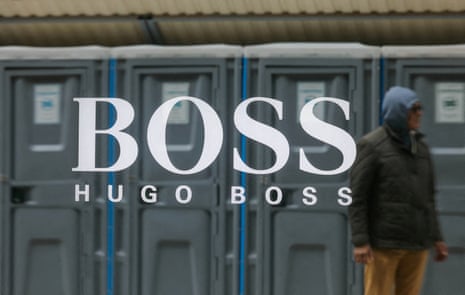
The retail billionaire Mike Ashley has given the latest indication that his summer shopping spree may be far from over, after he increased his stake in luxury giant Hugo Boss to nearly half.
Ashley's Frasers Group, which last week bought Harvey Nichols department stores for a reported £40m, increased its shareholding in the German fashion house to 48%, falling just short of taking full control.
In June, the British billionaire made a nearly €2bn (£1.73bn) takeover offer for the luxury group, but its board rejected Frasers' bid as “inadequate†and urged shareholders not to accept Ashley's offer.
The new, higher stake comes after 17.6% of shareholders accepted Ashley's offer of €38 per share. That bid reflected only a 4% premium to Hugo Boss's shares when it was tabled.
Despite this, Axel Rudolph, an analyst at investing platform IG, said it was “another major step towards gaining control†of the German company. Ashley's new shareholding puts Frasers “firmly in the driving seat as it looks to increase its influence,†he added.
Ashley bought Harvey Nichols out of administration last week after the upmarket chain, which has 13 stores and 1,200 employees, warned it could run out of money if it did not find new funding. He also launched a bid to snap up the Australian footwear business Accent Group earlier this summer.
Foodservice inflation in July ‘calm before storm’ amid drought

Helena Horton
A 0.2% rise in UK foodservice inflation for July is the “calm before a potential stormâ€, experts in the sector have said as they brace for price hikes due to poor harvests.
The price of monthly price increases has slowed from 1.8% in June to 0.2% in July but climate-related disruption is fuelling market volatility, according to data from NIQ (Nielsen IQ) and business consultants Prestige Purchasing.
The drought has caused what could be the worst harvest on record for modern times. Of particular concern are vegetables, including broccoli, cauliflowers, potatoes, onions, carrots and parsnips. Fruit has done fairly well, however, with strong availability of British strawberries, raspberries, blackberries, blueberries, plums and early-season apples.
Global grain markets have also strengthened, with wheat exports facing disruption in the Black Sea, and growing conditions have been unfavourable due to the drought.
Shaun Allen, chief executive of Prestige Purchasing, told the Propel newsletter:
double quotation mark July's marginal 0.2% increase feels like the calm before a potential storm. With UK drought conditions actively threatening domestic vegetable yields, and global grain markets reacting to renewed geopolitical stress in the Black Sea, operators cannot afford to be complacent. The transition from summer to autumn will be a critical period for supply availability, making proactive, data-led procurement absolutely essential.
Reuben Pullan, senior insight consultant at NIQ, added:
double quotation mark Broadly flat prices in July disguise significant volatility in the foodservice supply chain, and buyers face a very uncertain autumn and winter. While high temperatures can work to the advantage of many hospitality businesses in sales terms, extreme climate issues are likely to have seismic impacts on their operations in the years to come. Mitigating inflation is an urgent priority for venues seeking to retain guests and protect margins.
UK grocery inflation slows to 2.1%, lowest in two years
Grocery inflation in the UK has slowed to the lowest rate in almost two years, bringing some relief to households, a monthly survey shows (ahead of tomorrow's official inflation data).
Inflation at supermarkets and other grocers eased for a fifth month, to 2.1% in the four weeks to 9 August – the lowest since October 2024, according to Worldpanel by Numerator.
Shoppers continue turn to promotions to keep costs down, with 31.3% of sales including a deal in the last month – the highest level this year.
While premium own-label supermarket products moved back into double figures for the first time since March at 11.1%, 96 million shopping trips included a value own-label product in the last four weeks.
Sally Ball, business unit director at Worldpanel by Numerator, said:
double quotation mark With inflation slowing again, this marks the fifth consecutive month of easing prices. Shoppers are feeling the relief with 39% now feeling financially comfortable, marking the highest level of financial confidence since November 2021.But it's by no means the same picture for all, with 20% reporting that they are struggling, and this has a clear impact on spending decisions. Among these households, 30% are more likely to prioritise grocery essentials over additional summer spending such as holidays and travel.
The hot weather drove shoppers to buy summer favourites with ice cream and sorbet sales rising 26.1% and suncream up 58.4%.
Sales of dips rose 23.3%, while coleslaw was close behind at 23.1% and potato salad up 22%. Chilled finger foods rose by 15.2%, chilled quiche by 15.8%, and chilled olives were up 13.3%.
Ball said:
double quotation mark The continued heat across the UK has certainly impacted the way people are eating and drinking. Earlier this summer we saw that mealtimes were being pushed later in the day, with 13% of evening meals now eaten after 8pm. Shoppers have been trying to stay cool this month, with soft drinks growing 15.1% in spend, while the freezer aisle saw shoppers stocking up on ice cream, sorbet and frozen fruit to beat the heat.

Youth unemployment down but remains at high level
Philip Shaw, chief economist at Investec, noted that the level of job vacancies now stands at its lowest level since April 2021. He added:
double quotation mark A brighter spot was that the rate of youth unemployment came down to 16.2% in June. This is relatively good news, but the data are volatile and so we would perhaps not place too much weight on one month's data. Moreover of course this is a high level, which has climbed by over 2.5 percentage points over the past two years.
Pat McFadden, the UK's work and pensions secretary, said:
double quotation mark It's encouraging to see signs of progress in the latest figures, with employment on the up and a continued fall in unemployment rate.
He said the government had put in place reforms to overhaul the benefits system and to support people to find work, including a youth jobs grant to encourage businesses to hire young people.
double quotation mark We will continue to reform welfare and employment support so that more people can live independently and restore opportunity across the country.
Sanjay Raja, chief UK economist at Deutsche Bank, noted that job vacancies – the best proxy for jobs demand – slowed. The vacancy to unemployment ratio has also been stable for a few months now at 0.4.
Second, the number of redundancies slowed to 106,000, its lowest level since July 2025. Third, the claimant count jobless rate (which measure the number of people out of work who are applying for jobless benefits) also dropped from 4.4% to 4.3%. Fourth, labour market flows point to some momentum in activity too. The underemployment rate dropped from 8.6% in the first quarter to 8% in the second quarter.
Raja added:
double quotation mark Put simply, while the labour market may seem stagnant on the surface, there are some signs of stabilisation on the horizon.For the Bank of England's monetary policy committee, today's data won't do much to move the dial. Weakness in headline indicators should keep the MPC stuck on the sidelines for now as markets turn their focus to tomorrow's inflation data.
Professor Costas Milas from the Management School at the University of Liverpool said:
double quotation mark Bank of England policymakers will be “reassured†that private sector wage growth slowed down to 2.8%. This, however, might only prove short-lived.The problem is that public sector wage growth continues to outpace strongly wage developments in the private sector. Indeed, annual average regular earnings growth was 6.1 per cent for the public sector (ONS notes that public sector annual pay growth continues to be affected by variations in the timing of pay awards this year).
Cool UK jobs market ‘questions need for rate hikes’ – economists
James Smith, developed markets economist, UK at ING, said the cooling labour market means there is no need for the Bank of England to raise interest rates, unless there is a “severe and prolonged spike†in energy prices as a result of the Middle East war.
He has crunched today's numbers.
double quotation mark If the UK economy really is picking up speed – as last week's GDP data tentatively hints – then there's little sign of it in the jobs market.Admittedly, just like the growth figures, it really depends on where you look. Government is still actively hiring, a trend we've seen throughout this year. Payroll growth is running at 1.1% on a three-month annualised basis, though we have our doubts over how long this can continue given the more austere plans for public spending coming down the track.
In sharp contrast, consumer-facing industries (hospitality and retail) have been consistently shedding jobs, and if anything, the pace of decline is getting worse. That follows ongoing pressure since last year's tax and minimum wage hikes. The remainder of the private sector is flatlining – and apart from last week's more optimistic KPMG/REC hiring survey, most other surveys don't point to any sign of an imminent upturn.
That disconnect is clearly visible in wage growth. Pay is rising by 6.1% across government, compared to just 2.8% in the private sector. Admittedly, that latter figure is being slightly depressed by “compositional†effects, something the BoE is keen to point out.
Still, the basic story here is that the jobs market is cool. We can see that in the vacancy numbers, which are still gradually falling and are well down on pre-Covid levels. We can see that in the unemployment rate, notwithstanding the latest reliability issues. And crucially for the Bank of England, there is little sign that wage growth is about to turn higher.
Barring a severe and persistent spike in energy prices, we think the Bank will keep rates on hold until next spring, before cutting rates at least twice in 2027.
Here is our full story:
And here's the union point of view. TUC general secretary Paul Nowak said:
double quotation mark Exploitative zero-hours contracts are endemic in this country, with more than 1.2 million people stuck not knowing how much they're going to earn each week. That's why the government must deliver on its promise of a right to guaranteed hours for everyone.Employers are addicted to this one-sided flexibility. But the vast majority of insecure workers have struggled to meet their basic living costs because they haven't been offered enough hours – and one in three face a financial hit of at least £3000 a year from cancelled shifts and incurred costs.
We need to get young people into work – but it isn't good enough to push them from unemployment into rampant insecurity. No young person benefits from a race to the bottom – they deserve good, secure employment like anyone else.
It's time for the government to double down on its plans to make work pay, expand the youth jobs guarantee, and stamp out exploitative zero-hours contracts once and for all.
The data showed UK wage growth, excluding bonuses, in the private sector slowed to 2.8% – the weakest growth rate since October 2020.
Pay growth in the public sector accelerated to 6.1%, reflecting the payment of NHS staff pay rises earlier in 2026 compared to 2025, which distorts the figure.
Jake Finney, a senior economist at PwC UK, said:
double quotation mark On the face of it, the latest labour market report looks relatively benign. Unemployment, employment and inactivity remain broadly stable, while vacancies edged down but are essentially levelling off. The jobs market remains soft, but it isn't collapsing.
Introduction: Oil prices rise as US-Iran ceasefire ends; UK wage growth slows amid cost of living squeeze
Good morning, and welcome to our rolling coverage of the global economy, the financial markets, the eurozone and business.
Oil prices have risen, trading above $90 a barrel, as hopes faded for a permanent deal to end war in the Middle East and a ceasefire between the US and Iran ended, heightening fears about energy supplies.
Iran will shift â to a “fully offensive“military stance as efforts have stalled towards a permanent end to the war, a senior Iranian official told Reuters on Monday, as Washington ruled out extending their temporary ceasefire â pact.
Brent crude futures climbed 0.8%, to $91.60 a barrel, the highest since 30 July.
US West Texas ‌Intermediate crude futures were up ‌75 cents at $85.25 a barrel, after hitting $85.37, the highest ‌since 31 July.
Wage growth in the UK has slowed amid a cost of living squeeze, while the unemployment rate dipped slightly, official figures show.
Figures from the Office for National Statistics show average growth in total earnings, including bonuses, fell to 4.1% in the three months to June, down from 4.3% in the three months to May. City economists had forecast a bigger fall to 4%.
Excluding bonuses, regular pay growth ticked up to 3.5% from 3.4%, higher than the 3.4% expected by economists.
Liz McKeown, the ONS director of economic statistics, said the data showed “some softening†in the jobs market despite a broadly unchanged overall picture.
double quotation mark Regular wage growth has remained broadly stable in recent months. However, private sector pay growth has continued to ease, while public sector pay growth remains elevated due to the timing of the latest NHS pay awards.
The UK's unemployment rate remained at 4.9% in the three months to June. The number of job vacancies remain on a downward trend, falling 6,000 to 707,000 in the three months to July.
Felix Feather, economist at the fund manager Aberdeen, said:
double quotation mark Today's labour market figures continue to point to a softening UK jobs market.Regular private-sector pay growth, which is closely watched by Bank of England officials, eased to 2.8% from 2.9% previously. Meanwhile, the more timely indication from PAYE payroll data showed employment fell again, this time by 13,000.
Broadly, the labour market has been loosening for some time. Hiring activity has softened, vacancies have trended lower, and businesses continue to face a challenging demand environment.
This underlines our expectation for the Bank of England to be on hold for the rest of the year. Still, we expect inflation will jump at tomorrow's reading, due to the recent uplift in the energy bill price cap, challenging the impression of domestically generated disinflation reflected in the recent dataflow.
The Agenda
-
10am BST: Eurozone and Germany ZEW confidence for August
-
1.30pm BST: US Housing starts for July